

By James Wilson
Scranton sits firmly in the humid continental climate zone, which means we experience four distinct seasons. To plan ahead, stay comfortable, and care for our surroundings, it helps to understand what Scranton’s climate looks like in its normal years—and how it’s changing.
Seasonal Weather Highlights
Winter
Winters in Scranton are cold and snowy. Average daytime highs in January are near 34 °F, with nighttime lows around 18–20 °F. Snowfall averages about 45 inches per season, peaking in January. Late fall and early spring see snow occasionally, though most snow falls between November and March.
Summer
Summers here are warm, sometimes hot. July is generally the warmest month—with highs near the low-to-mid 80s, occasional days over 90 °F, and humid nights in the 60s. Thunderstorms and showers are more frequent in summer and late spring.
Shoulder Seasons (Spring & Fall)
Spring blooms between April and May. Temperatures slowly climb from 40s to 70s. Fall, from September into October, brings colorful foliage and cooling nights. These transitional seasons can be wet, especially spring. First frost usually comes around mid-October, and the last frost around late April.
Trends & Climate Change Impacts
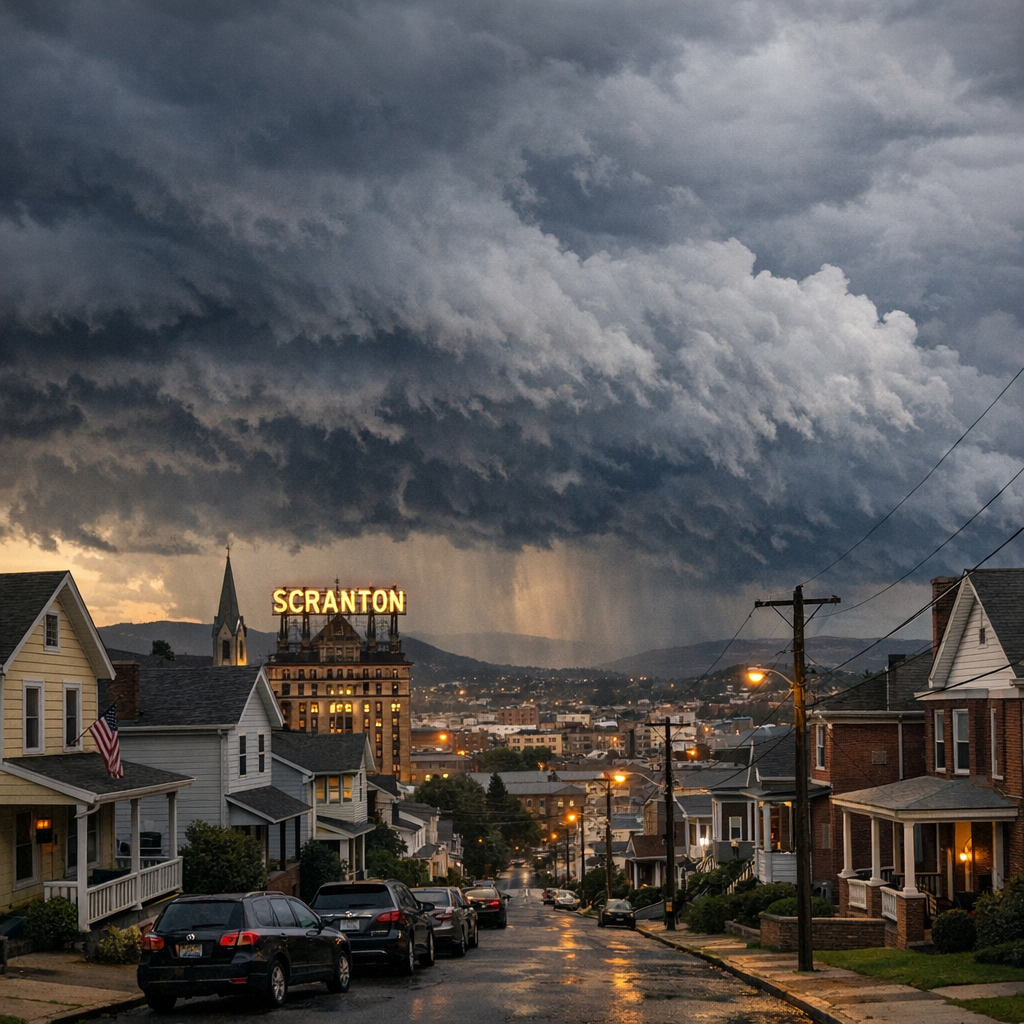
Scranton’s precipitation has increased noticeably over the past century—by over 10% since the early 1900s. More rain and heavier storms mean higher flood risk in low-lying areas. At the same time, average annual and extreme temperatures are creeping upward. Winters are less frigid on average; heat waves in summer are more common.
The state’s 2024 climate impact assessment predicts that Pennsylvania—including Scranton—will see more intense heat, heavier rainfall events, worsening flood risk, and more frequent vector-borne diseases. This makes local planning, green infrastructure, and public health responses more urgent.
What Scranton is Doing
The City has adopted a Sustainability and Climate Action Plan to reduce greenhouse gas emissions, prepare for extreme weather, and make communities more resilient. As part of that effort, Scranton is developing a greenhouse gas inventory, engaging with residents, and exploring nature-based solutions to flooding.
Tips for Residents
- Prepare for snowy winters: Keep heating systems maintained, insulate homes, and plan for snow removal.
- Manage summer heat: Shade, hydration, and community cooling centers are useful for the most vulnerable.
- Handle heavy rain: Plant native trees, reduce impermeable surfaces, and stay alert to flood warnings.
- Support local climate efforts: Participate in public meetings and local programs helping with sustainability and resilience.
Understanding local climate patterns and seeing how we’re adapting gives us tools to protect Scranton’s people, places, and nature. The city’s climate may be changing—but with knowledge and action we can shape how Scranton responds.