

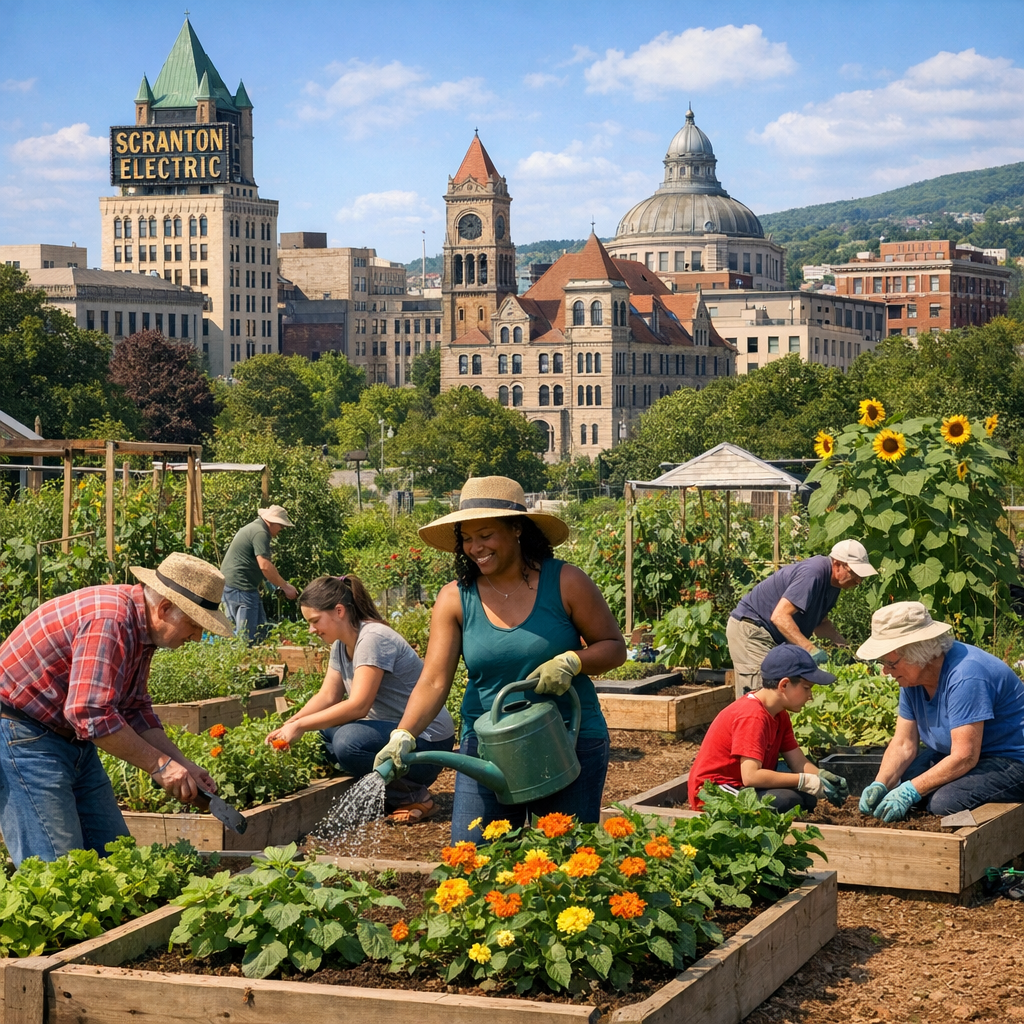
Scranton, Pennsylvania, is witnessing a concerted effort among its institutions and organizations to promote sustainability and environmental stewardship. These initiatives aim to create a greener, more resilient community for current and future generations.
City of Scranton’s Climate Action Plan
The City of Scranton has developed a comprehensive Climate Action and Sustainability Plan to address climate change and promote sustainable practices. This plan includes:
- Developing a community-wide greenhouse gas inventory to identify major sources of emissions.
- Securing funding to expand electric vehicle infrastructure and the city’s electric vehicle fleet.
- Implementing energy efficiency upgrades in municipal buildings.
- Enhancing stormwater management to mitigate flooding risks.
These efforts demonstrate the city’s commitment to reducing its environmental impact and fostering a sustainable future.
Penn State Scranton’s Green Initiatives
Penn State Scranton is actively engaging in sustainability through various projects:
- Agricultural Enrichment Project (AEP): A student-run garden producing flowers, herbs, and vegetables, with proceeds supporting THON fundraising efforts.
- Campus Apiary: Introduction of beehives to promote biodiversity and educate students on the importance of pollinators.
- Green Building Practices: Incorporation of energy-efficient systems in new constructions, such as the LEED-NC certified Business Building.
These initiatives reflect the campus’s dedication to integrating sustainability into education and operations.
The University of Scranton’s Sustainability Efforts
The University of Scranton emphasizes sustainability through:
- Curriculum Integration: Infusing sustainability topics across various disciplines to prepare students for environmentally conscious careers.
- LEED-Certified Facilities: The DeNaples Center, a 118,000-square-foot facility, achieved LEED certification for its green design and features.
These efforts underscore the university’s commitment to environmental responsibility and education.
Community Organizations Promoting Sustainability
Several local organizations are contributing to Scranton’s sustainability landscape:
- The Greenhouse Project: Located in Nay Aug Park, this nonprofit offers educational programs on whole foods, gardening, and nutrition, managing community gardens and hosting workshops.
- Lackawanna Heritage Valley Authority: Focused on preserving and promoting the region’s history and natural resources, this organization connects communities through shared heritage and environmental renewal.
These organizations play a vital role in fostering community engagement and environmental awareness.
Through collaborative efforts among the city, educational institutions, and community organizations, Scranton is making significant strides toward a sustainable and environmentally conscious future.