

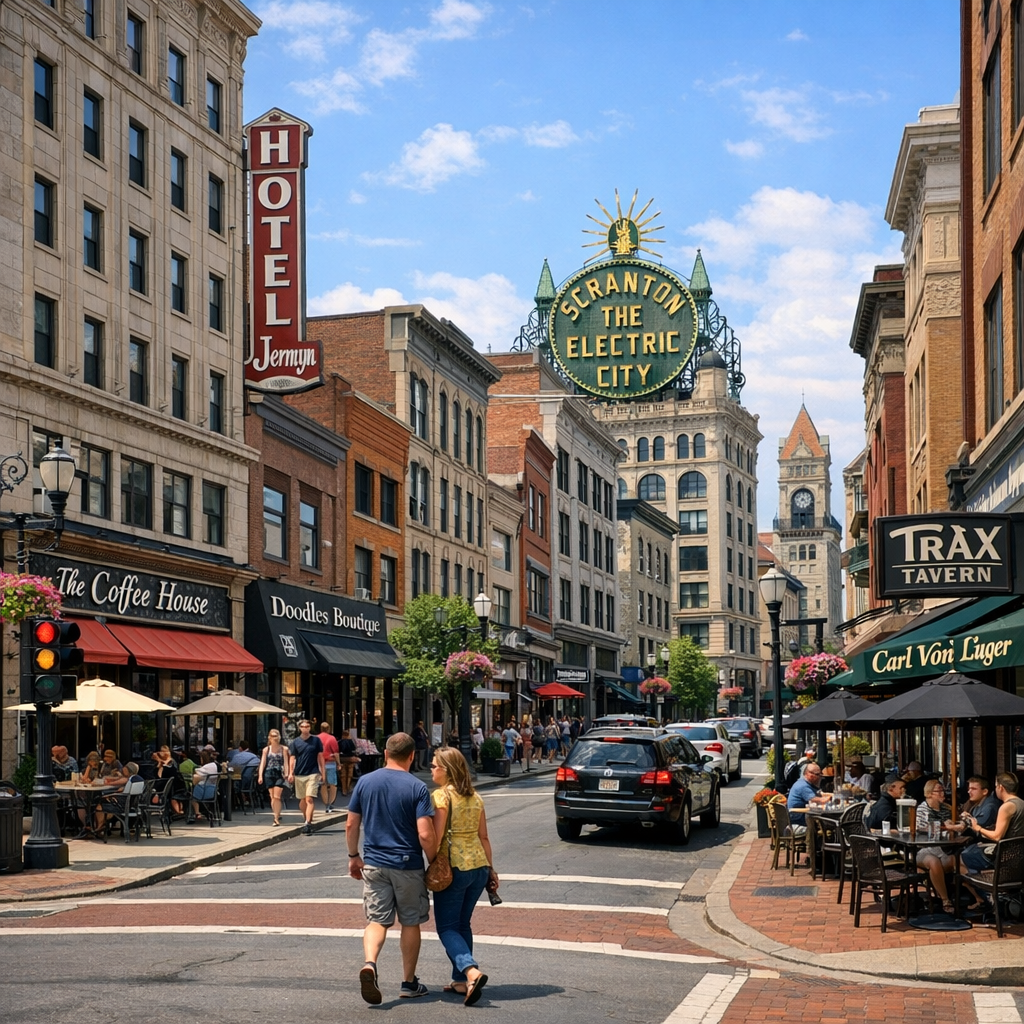
Scranton, Pennsylvania, has long been emblematic of the American industrial spirit. From its early days as the “Electric City” to its pivotal role in the coal industry, Scranton’s economic landscape has evolved in tandem with national trends. Today, as the nation grapples with economic uncertainties, Scranton stands as a testament to resilience and adaptability.
Economic Growth and Development
Recent years have witnessed a surge in development within Scranton. The downtown area, once dotted with vacant buildings, now buzzes with activity. Developers have revitalized historic structures, transforming them into modern offices, lofts, and retail spaces. This renaissance has not only preserved the city’s architectural heritage but also attracted new businesses and residents, bolstering the local economy.
Educational Investments
Education remains a cornerstone of Scranton’s growth. The University of Scranton, a longstanding institution, continues to make significant contributions to the community. In the 2011-2012 academic year alone, the university’s economic impact was estimated at over $400 million. Beyond economics, the university fosters community engagement through various programs and initiatives.
Community Initiatives and Cultural Preservation
Understanding the importance of preserving its rich history, Scranton has embarked on projects like “Scranton’s Story, Our Nation’s Story.” Supported by a grant from the National Endowment for the Humanities, this initiative seeks to capture and share the city’s diverse heritage, connecting local narratives to the broader American story. Such endeavors not only honor the past but also inspire future generations.
Challenges and Community Response
Despite these positive strides, Scranton faces challenges. The potential closure of the Penn State Scranton campus has raised concerns about educational access and economic repercussions. Local leaders, including Mayor Paige G. Cognetti, have actively engaged with university officials, emphasizing the campus’s significance to the community and advocating for its continued operation.
Similarly, the introduction of data centers in the region has sparked debates. While proponents highlight potential economic benefits, some residents express concerns about environmental impacts and community disruption. These discussions underscore the need for balanced development that considers both economic growth and community well-being.
Looking Ahead
Scranton’s journey reflects a broader narrative of American cities navigating the complexities of modern economies. By leveraging its rich history, investing in education, and fostering community initiatives, Scranton exemplifies how local resilience can complement national progress. As the city continues to evolve, its commitment to balancing growth with community values offers a model for others facing similar challenges.